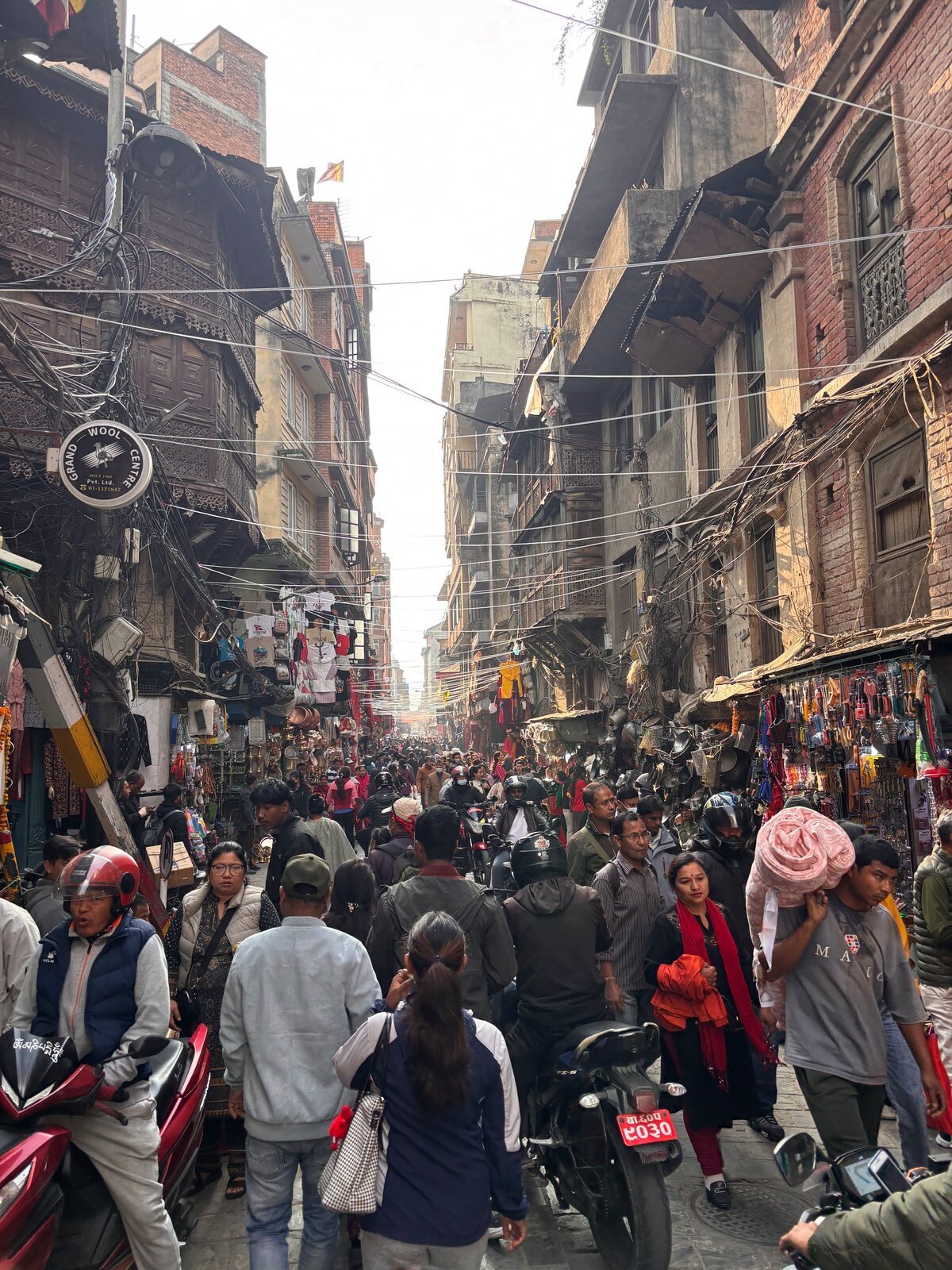
In this post I want to share some tips I wish I had known when planning my first trip to Nepal. If you are planning to spend 2–4 weeks around Kathmandu, Pokhara and, maybe, to do a short trek - read on. Do note: I traveled from the US, so your mileage may vary. This is how things were for me in late 2026. You might also like the post on Mardi Himal Trek near Pokhara I wrote recently.
Cheat Sheet
- Visa: get it on arrival and pay in cash (USD or euros): $30 for 15 days, $50 for 30 days, $125 for 90 days
- Cash: ATMs are the cheapest way to get rupees, but expect about 5% in fees. Choose to be charged in NPR and withdraw close to the transaction limit (35,000 NPR at Nabil)
- Cards: they work in mid-to-high tier tourist places, but not in local apps. Fonepay QR via the MOCO Wallet app is a good alternative (3.8% surcharge for me)
- SIM: under 30 days a data eSIM is enough; for longer stays a local eSIM from Nepal Telecom or Ncell costs $10-15 and needs your passport
- Tipping: voluntary in restaurants but common, 10-15% in tourist places; trekking guides and drivers expect tips
- Taxes: menu prices are supposed to include VAT and service charge, but check the fine print at mid-range and upscale places
- Toilets: carry your own toilet paper
- Apps: Useful Apps
Visa Application
I applied for a 30-day e-Visa over the Internet before arriving in Nepal, hoping it would save me some time at the border. It didn’t work: the immigration system at Tribhuvan airport didn’t recognize any prior applications. Everyone, myself included, had to apply for a visa on arrival, which took about 10 minutes in line.
The options for tourists from the US are:
- 15-day visa: $30 USD
- 30-day visa: $50 USD
- 90-day visa: $125 USD
- Visa extension: $45 USD for 15 days, then $3 per day
Check the official Nepal Tourism Board visa page for the current fees and rules.
Cash US dollars and euros are accepted as payment, so don’t stress about not having Nepali rupees when you fly in. Just do not pay with a credit card at the border. I didn’t want to give up my limited cash and thought I was playing the system by paying with a credit card, but the system played me: the payment was treated as a cash advance, with the corresponding surcharge. Moral: pay for a visa with cash.
I extended my visa at the immigration office in Pokhara. The process was fast, easy and straightforward. Payment is in NPR and cash only.
Local Cell Phone Number
While you can get by with just a data eSIM from Airalo or your preferred provider, a local SIM gives you a local phone number. You sometimes need one to subscribe to services, contact locals and so on. My rule of thumb: if you visit for less than 30 days, you probably don’t need a local SIM. If you plan to spend more time in Nepal and want a second data / phone number option, go for a local eSIM.
There are two major players: Nepal Telecom (NT) and Ncell. Both have counters in Tribhuvan airport, and you can get a local eSIM with a data pack add-on for $10-15 USD, depending on how much data you need. I got a plan with 2 GB per day for 30 days and it was plenty for me: most touristy places have Wi-Fi anyway. You will need to provide your passport to register in the telecom’s KYC (Know Your Customer) system.
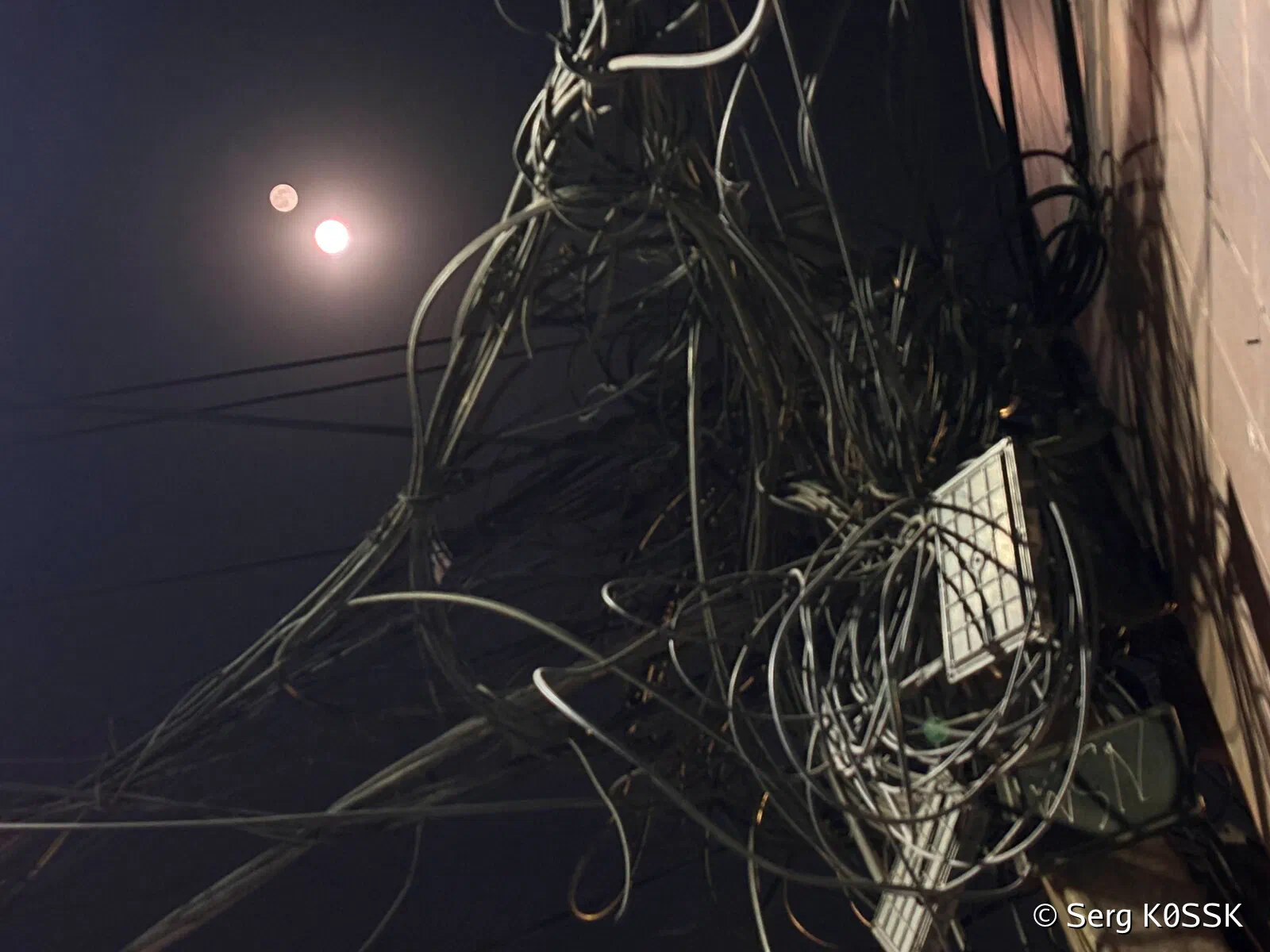
Full Moon shines through a tangle of cables in Kathmandu
I read online that Ncell has better coverage in cities while Nepal Telecom is better in the countryside. I opted for Nepal Telecom because I wanted coverage while trekking, and it worked out okay: I had enough Internet to use WhatsApp during my Mardi Himal trek.
Ncell shops are common in touristy areas; I don’t remember ever seeing a Nepal Telecom one. The only way I found to top up my account after a month was the mobile “recharge” option in the Hamro Patro calendar app, and it worked with my US-issued Visa card. This was a pleasant surprise: I could not get any other local app to accept a US-issued credit card.
Cash, Cards, ATMs
Cash and ATMs
If not a king, cash is still at least a duke. Everyone prefers cash because you don’t have to pay a cut to a bank.
The most economical way I found to get Nepali rupees is to use ATMs. There are no fee-free ATMs in Nepal as far as I know; in my case fees added up to about 5%. Always choose to be charged in Nepali rupees, otherwise you’ll pay an additional conversion fee.
I used Nabil bank ATMs: good presence in Kathmandu, decent in Pokhara. I was able to use a Nabil ATM in Tribhuvan airport with no issues. The transaction limit was 35,000 NPR and the daily limit 50,000 NPR. You want to withdraw as close to the transaction limit as possible because most US banks charge a flat fee for foreign ATM transactions, so small withdrawals cost you more in proportion.
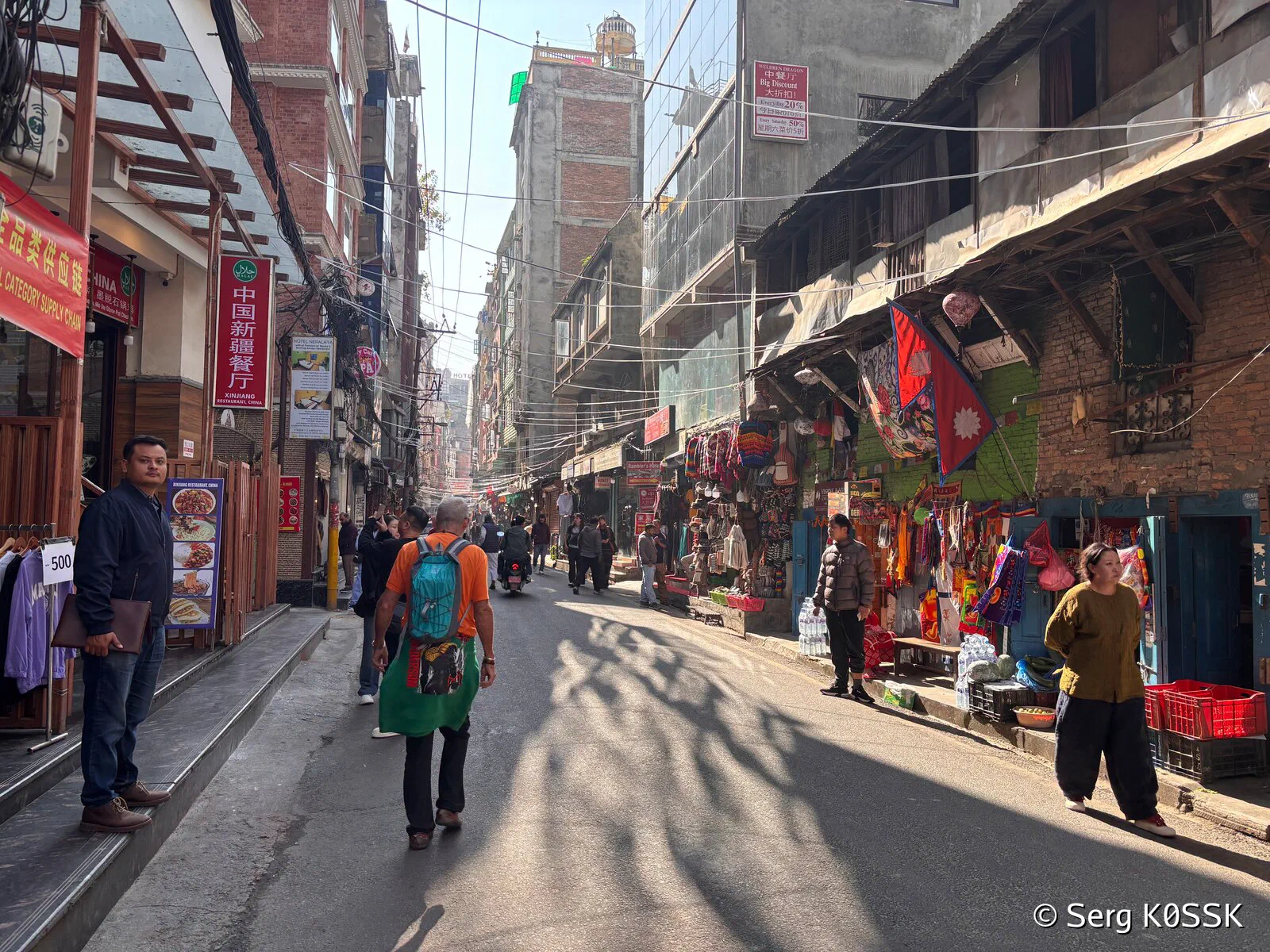
In Kathmandu: Thamel district
Make sure you don’t use up all your cash during festivals. ATMs in the Lakeside district of Pokhara ran dry between Dashain and Tihar 2026, and I had to go to central Pokhara to get cash.
Cards
US-issued credit cards do work in most mid-to-high tier tourist-oriented businesses via Wi-Fi-connected bank terminals. Because banks charge extra, this is a far less preferred option for locals than cash. It appears to me this technology is still relatively new in Nepal and is not used often: more often than not a terminal just collects dust and resists any attempt to switch it on, due to a low battery, poor Wi-Fi or just an inauspicious conjunction of the Sun and Moon. It takes ages for a terminal to boot up. Contactless payments through a terminal work most of the time, but not always, so carry your physical card when you plan to pay with it.
Don’t assume you can just use your foreign Visa or Mastercard to pay for online services in Nepal. The banking system here is its own walled garden: I was not able to use any of my cards with any of the local ride-hailing / delivery apps. I wasn’t able to top up my Nepal Telecom account directly either. I paid inDrive, Pathao and Foodmandu couriers and drivers with cash.
Pro tip: I found it is sometimes cheaper to hail a taxi on the street than via an app.
Quite a lot of businesses, even small ones, accept Fonepay, a QR-code-based payment system similar to Alipay in China. As of now it is a far cheaper alternative (for locals) to having a bank terminal. Locals can scan QR codes and pay using local banking apps. I added my credit card to the MOCO Wallet app and was able to pay via QR codes as well. There is a 3.8% surcharge, but it is still better than the 5% I paid to get cash. Payments going through MOCO Wallet were categorized correctly (“dining” for restaurants, “travel” for hotels), earning bonus points on my credit card.
Useful Apps
- Offline Google Maps
- Offline Gaia Maps: for hikes and trekking
- Hamro Patro calendar: helps to top up your cell phone account as well as to keep track of the festival schedule
- Ride-hailing apps: Pathao, inDrive. If you can’t register, make sure your VPN is off
- Food delivery: Foodmandu
Food
Nepali food is quite similar to Indian food.
Thali
The staple is lentil soup with rice on the side: dal bhat. Usually it comes in a set called “thali”, literally “a plate”.
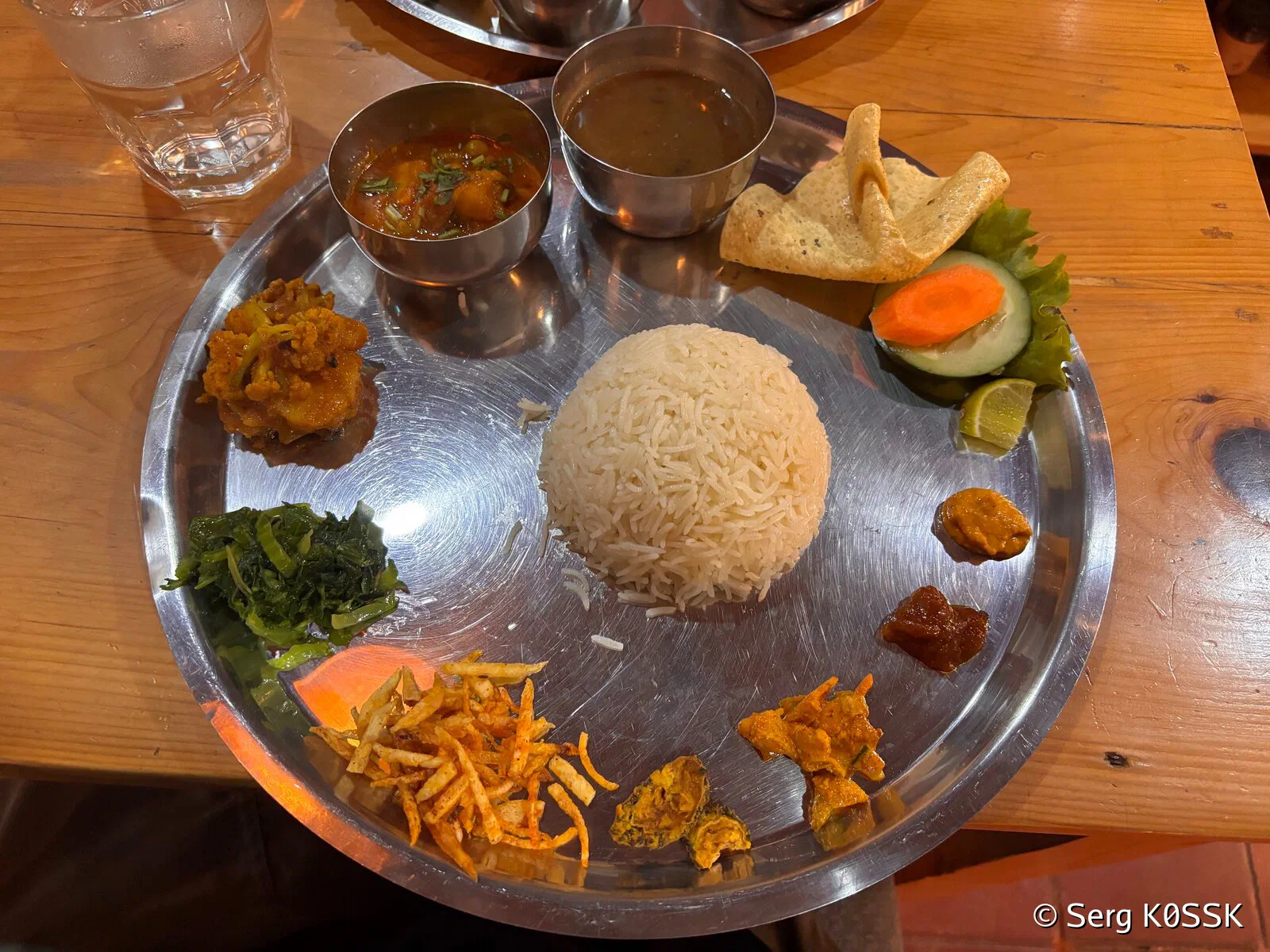
Thakali thali set on a traditional thali-plate
The three major thali types I had were:
- Thakali thali: named after the Thakali people, this is the “default” set based around white rice
- Dhido thali: popular in the mountains (where rice was not historically available), based around dhido, a thick porridge made of buckwheat flour
- Baji: based around beaten rice flakes, a Kathmandu Valley specialty. I didn’t like baji much and was afraid I’d chip a tooth on the hard beans it comes with
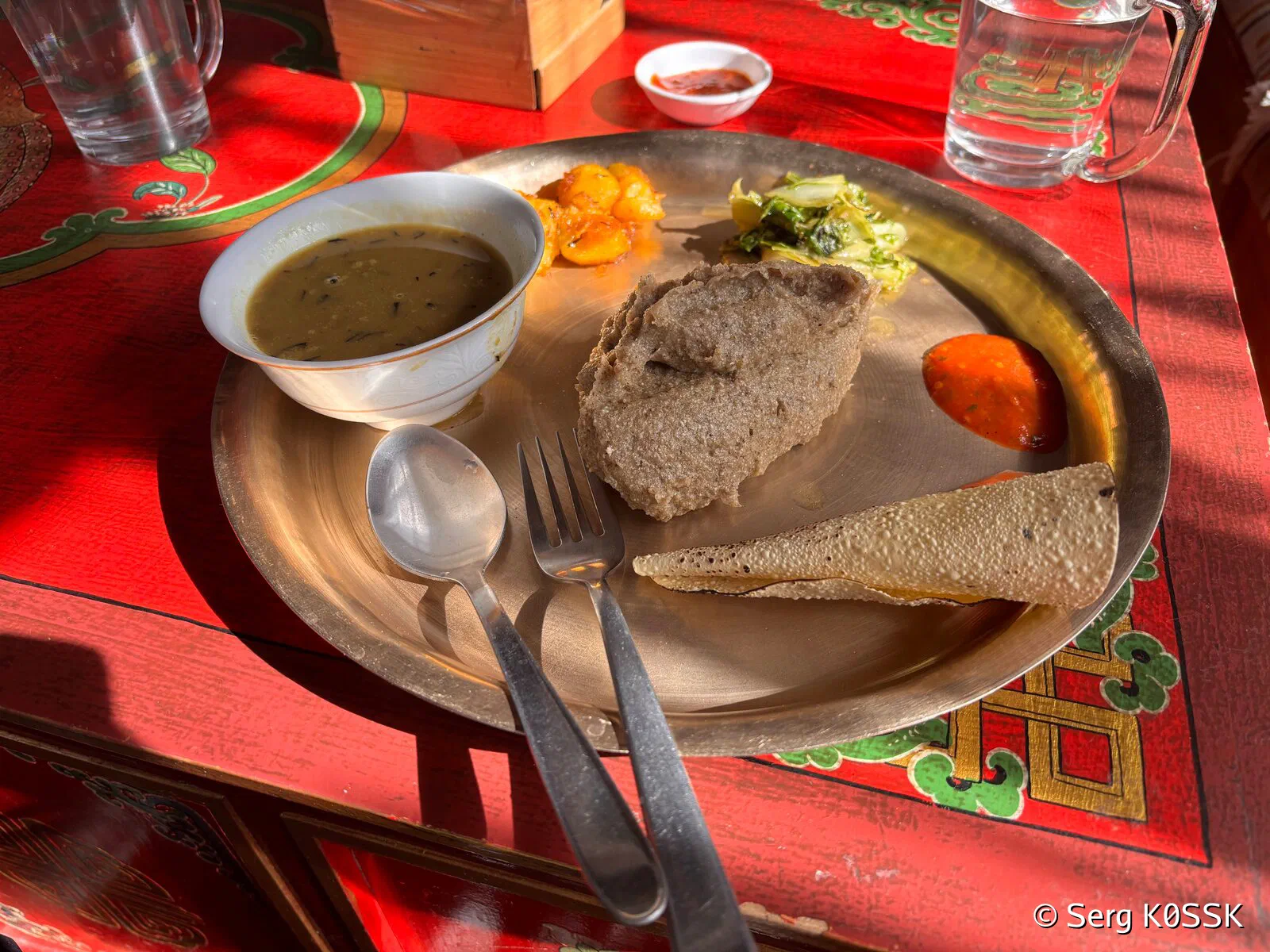
Dhido thali set
Besides the lentil soup and the base, a thali set usually contains:
- Saag: mustard greens. I found saag quite yucky at first but it grew on me in time
- Achar: a spicy and sour pickle that adds punch to bland rice. It is, like, really spicy and really sour, so be careful
- Tarkari: vegetable curry, usually potato-based
Non-veg versions also include meat. I have not tried any, so you’re on your own here.
Momo
Momos are dumplings that originated in Tibet.
Momos are big in Nepal (figuratively)
They can be vegetable-based, paneer-based (cottage cheese) or meat-based, and they are prepared in various ways:
- Steamed: the default mode of preparation
- Kothey: pan-fried on one side
- Deep-fried
- C (sometimes spelled “Sea” or “See”) momos: in chili sauce
- Jhol: in a spicy soup
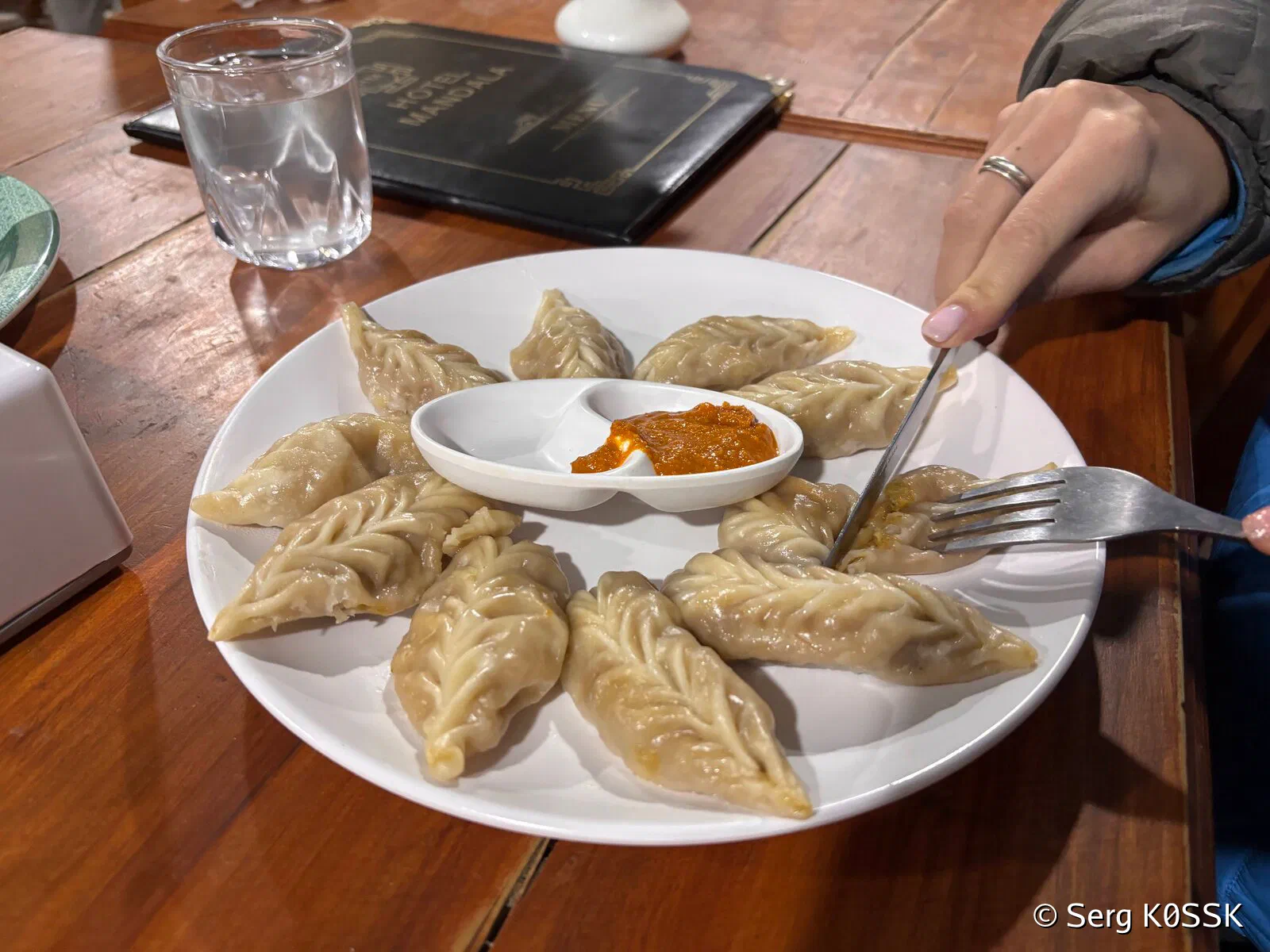
Steamed momos with spicy sauce
Notable Mentions
- Aloo jira: boiled potatoes with cumin, often included in thali sets
- Aloo paratha: flatbread stuffed with potato, often a breakfast option
- Chapati: thin flatbread, similar to roti (paratha is the thicker, layered, pan-fried version)
- Dal fry / tadka: lentil stew / soup variations
- Sadheko: spiced salad, must try
- Sekwa / sekuwa: grilled meat
- Sukuti: dried meat
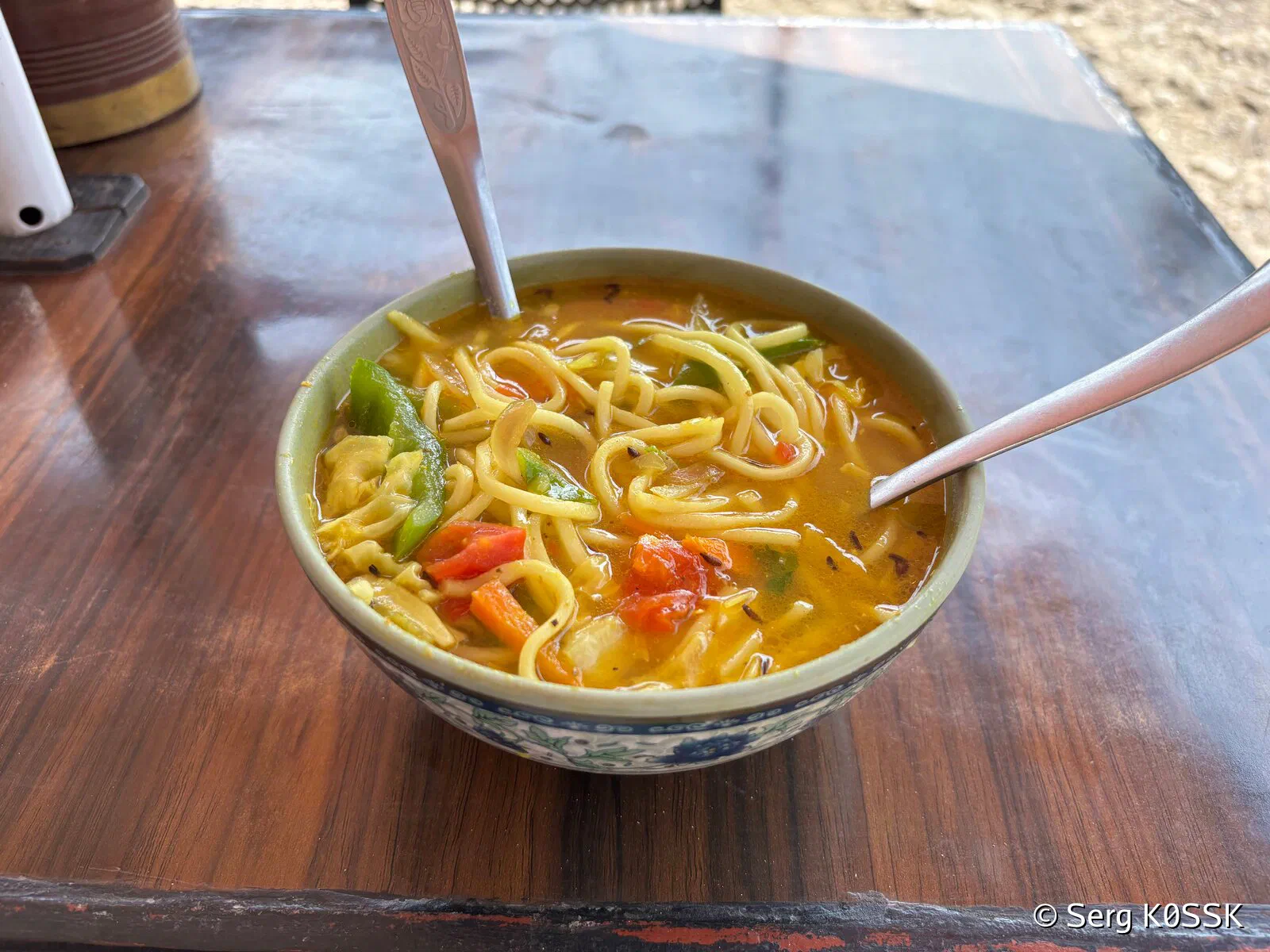
Thukpa
- Thukpa: Tibetan noodle soup with spaghetti-like noodles
- Thenthuk: Tibetan noodle soup similar to thukpa, but with flat or homemade noodles
- Paneer pakoda: fried cottage cheese cubes in gram flour batter
- Yomari: sweet dumpling, white and beet- or carrot-shaped, popular in Bhaktapur
Drinks
Green tea is rare, and no one here calls tea “chai” (it’s “chiya”).
- Masala tea: black tea with milk and spices
- Tibetan tea: with salt and butter, a must-have when it is cold
Culture
- Local people are very friendly and open. I genuinely felt welcome most of the time; ask and they will try to help you
- For many people spiritual practice is paramount. Stupas, shrines, small chapels are everywhere and people tend to them daily. The divine is ever-present here
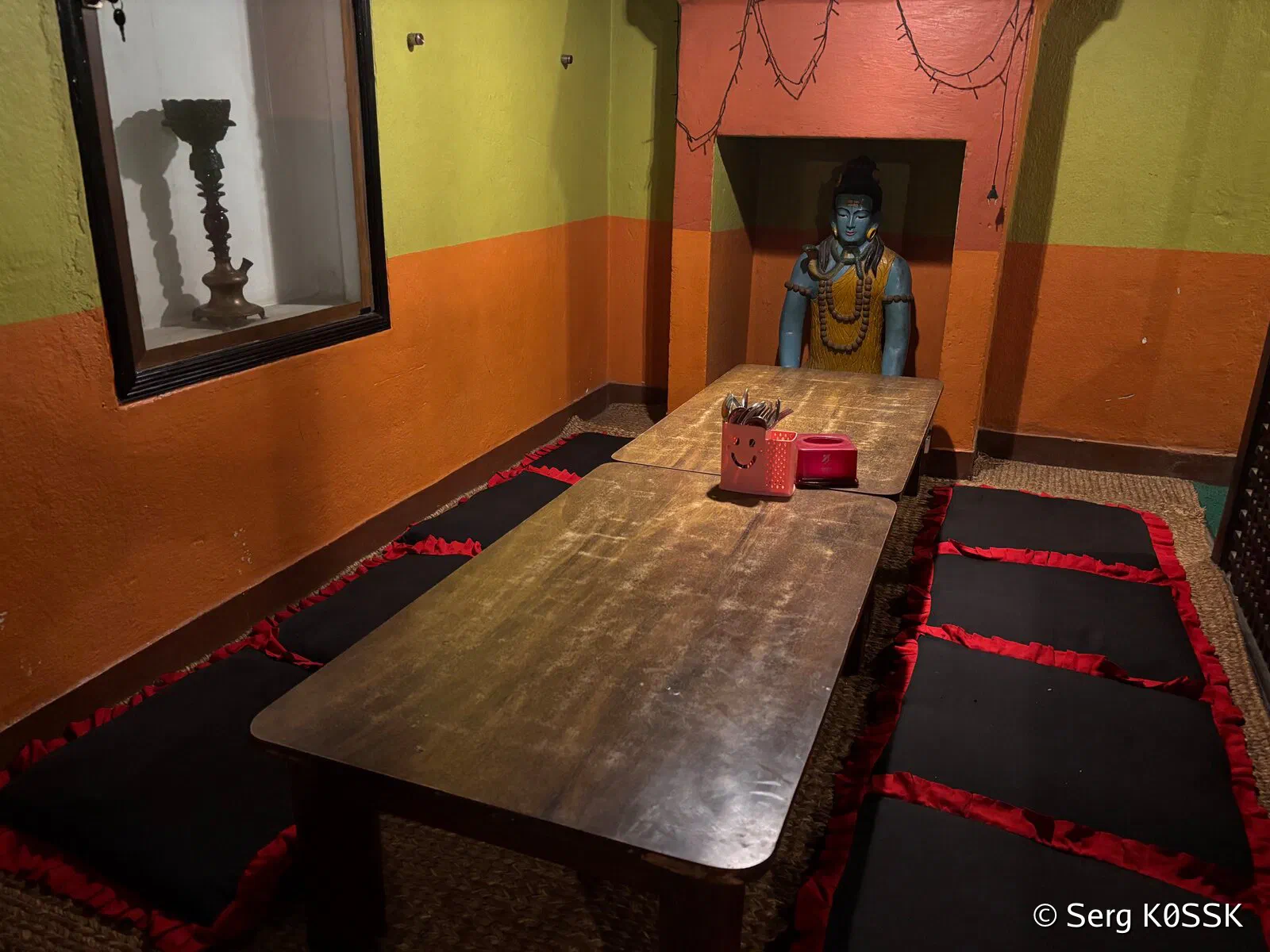
Shiva, patiently waiting for his order in a local restaurant
- Respect the privacy and dignity of people praying and performing pujas, they are not props in your photoshoot
- Everyone asks you “Where are you from?”, and for most people that is pretty much all the English they have. It seems to be a universal, non-committal way to start a conversation with someone who does not look local
- Most tourist-facing people have some English, some very good. Being polite goes a long way
- When you hand over or receive something of value, money for example, it is customary to use your right hand supported by your left
- The British system of floor numbers is in use: the ground floor is the lowest, the next one up is the “first floor”, and so on. You will never make sense of it or get used to it. It’s okay, don’t stress, just match the number on your key to the number by the elevator button
- Traffic drives on the left. Be extremely cautious crossing roads and always look both ways
- Tipping is voluntary but common. Since a 2023 Supreme Court ruling restaurants can no longer add a mandatory 10% service charge, but Fodor’s suggests tipping waiters and taxi drivers 10-15% of the bill. Trekking guides and drivers expect tips too. Do your research
- In my experience price tags include taxes and you pay what you see. Menu prices are legally supposed to include the 13% VAT and any service charge, but some mid-range and upscale restaurants still add 10% service plus 13% VAT at the bill, so check the fine print on the menu. Budget places usually don’t
Toilets
- The local English-language term is “washroom”
- High-end tourist-oriented places and hotels have western-style toilets stocked with toilet paper
- Mid-tier places would have a western-style toilet and a hose to wash your backside after doing number two, same as in India. It takes some courage and time to adjust to this system. Have a roll of toilet paper somewhere close just in case. Plumbing in Nepal is not designed to deal with high-ply toilet paper; you are expected to discard used paper into the bucket provided
- If you are trekking, taking city-to-city buses or just getting off the beaten path, you’ll mostly have access to squat toilets. Using them requires balance and quite a bit of ankle flexibility. Usually there is a tap and a bucket with a ladle to wash your left hand after doing number two and cleaning your backside. The right hand is used for eating. The cultural result is that the left hand is considered unclean. If you pass something, money for example, or utensils, use your right hand